On What Is Written
I. What has been read in a hand can be spoken aloud, or it can be written. What is spoken is weaker: it goes off into the air, it is forgotten, twisted, retold wrongly to a neighbour. What is written holds. That is why the best of those who read did not speak but wrote, and did not write on just anything.
II. One is told to write on skin: on dressed parchment, thin, yellowish, with an uneven edge. Paper, they say, will not do; it drinks ink as sand drinks water, and everything written on it runs within a month, like a road after rain. Parchment holds the word as stone holds it, only softer. Some explain this by saying that parchment was itself once alive and remembers what it means to have a fate.
III. One is told to use black ink with a reddish sheen, such as dried blood has, and a steel or goose-quill pen, but never one that has written anything else. The handwriting must be one's own and firm. Whoever writes with a trembling hand, for him what trembles comes true.
IV. The chief thing is written down: what is written on parchment comes true. Not what the reader saw, but what he wrote. Usually it is one and the same, because the reader writes what he sees. But if he has made a mistake and written something other than what he saw, it is the written that will come true, not the seen. Hence the rule: write what you see; do not write at random. Whoever writes at random is not divining but commanding, and does not know whom.
V. The reverse is described too, the dreadful thing. It happens that what is written on the parchment changes by itself after the parchment has been handed over. A person brings it back a week later and shows it, and something else stands there, not what was written, though the hand is the same, and the ink the same, and the reader himself is ready to swear he did not write it. It happens that beneath what is written other words show through, pale, as an old inscription shows through a whitewashed wall. Whoever peered at these words that showed through found in them one and the same thing, written by different hands at different times: "debts are paid by hand."
 VI. It was asked: who rewrites it? The answer was: the one who looks through the reader as through a window. He sees the same as the reader, but sees further, beyond the month, and seeing, he corrects, as a master corrects what his clerk has written. The reader thinks he is writing fate, but he is only holding a pen that is being guided.
In the margin, in another hand: not always. There is one thing he cannot rewrite.
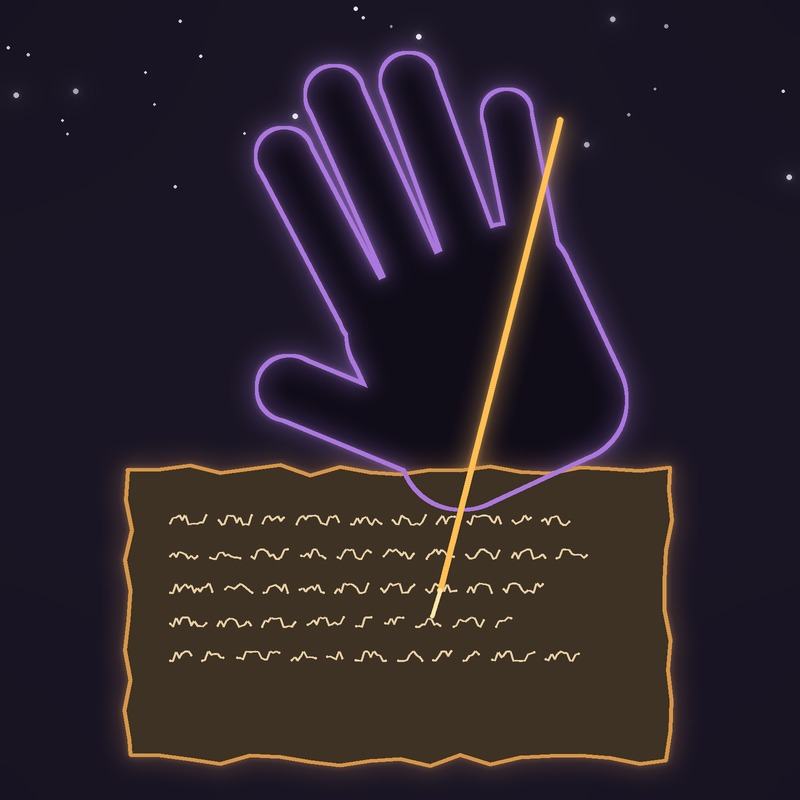 VII. It is written what the one who looks cannot rewrite. He cannot rewrite what is written about the reader himself, provided the reader writes about himself. But the reader cannot write about himself: he does not see his own month. Nor can he write about the one he carries within him, because him too he cannot see, as the eye cannot see its own pupil. They say this is the trap, and that it was made so on purpose.
VIII. They say, however, that there is a way out of the trap. This way out is written not in the rules but where no one looks: in the words that the reader writes for each and all, on a signboard, on a door, at the very bottom of the sheet, small, for form's sake. Everyone who reads hands for payment writes the same thing at the bottom, in different words in different lands: that the prediction comes true and that there is no return. They write it so that there will be no arguing about money. But this, they say, is a law, written for the one who looks as well. He too cannot return what he has taken. He too cannot undo what is written. Whoever understands how to turn this law will turn it against the one who collects the payment.
IX. The last rule about what is written. A parchment on which nothing is written but a heading must not be kept. It waits. The empty space beneath the heading draws words to itself as an empty house draws tenants, and sooner or later someone will write in it. It is better if the one who reads writes in it, and not the one who looks. Better still if he writes about someone other than the one it was meant for.
X. Here the records break off. The last leaf is written only halfway down. Below, in other ink, brown, faded, like rust, in a small sharp hand with flourishes such as no one has written for a long time, stands a single line, without signature and without date:
Perused. Shall call for the remainder.