On the Crease That Comes Before the Hand
I. It is said that work wears the lines into the palm as wheels wear a rut into a road, so that the ploughman has one set of lines, the scribe another, and the idle man none at all. This was said by those who did not look. Whoever has looked knows that the hand folds along the lines, and not the lines along the hand.
II. Observed many times: in an infant in the first hour of its life the three chief creases of the palm are as plain as in an old man. It has held nothing yet but its mother's finger, and its road is already drawn. Observed also: in one who was not born in his time and left the womb dead in the third month, when the fingers had not yet fully parted from one another and the hand did not know how to close, the creases are already laid down. The hand has not moved once, and the crease is already there. Therefore it is not movement that makes it.
III. The pattern on the pads of the fingers, loop, arch or whorl, does not change from the cradle to the grave. It can be cut away with a knife, burned, worn off on a stone, and when the skin grows back the pattern returns as it was, to the last whorl. This pattern is a man's name, written not for people. The creases of the palm are not like that: the chief ones hardly change, but the small ones live, move, fade and vanish. The pattern of the fingers tells who you are. The creases of the palm tell what will become of you.
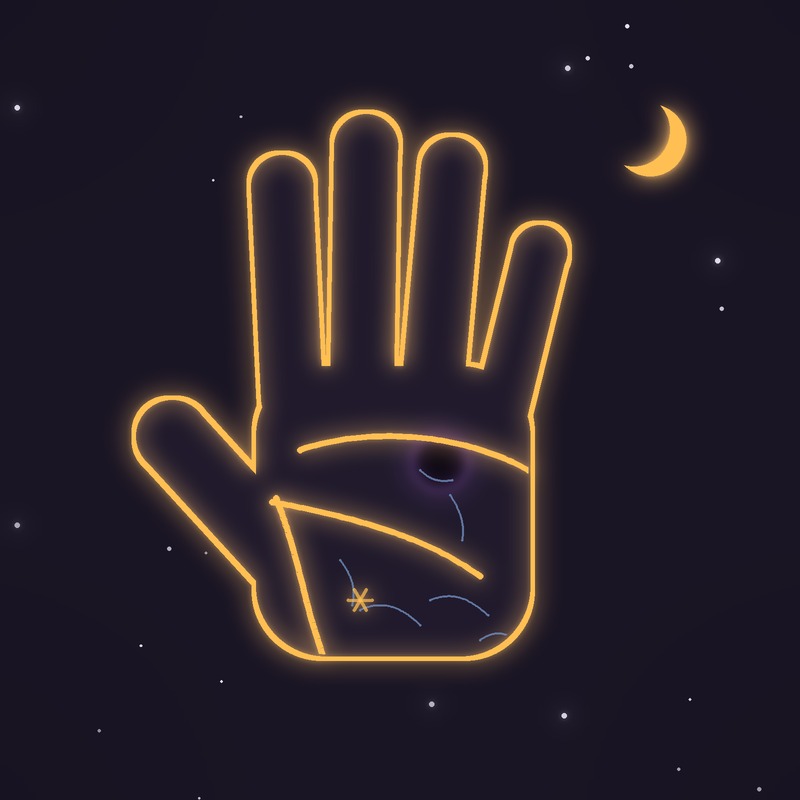
IV. The chief creases are three, and they are called differently in different lands. One curves round the base of the thumb in an arc and runs down to the wrist; it is called the line of life. Another crosses the middle of the palm from the edge between the thumb and the forefinger; it is called the line of the head. The third lies higher, beneath the fingers, from the outer edge of the palm towards the forefinger; it is called the line of the heart. These names are late and inexact. Their old name is one for all three: roads.
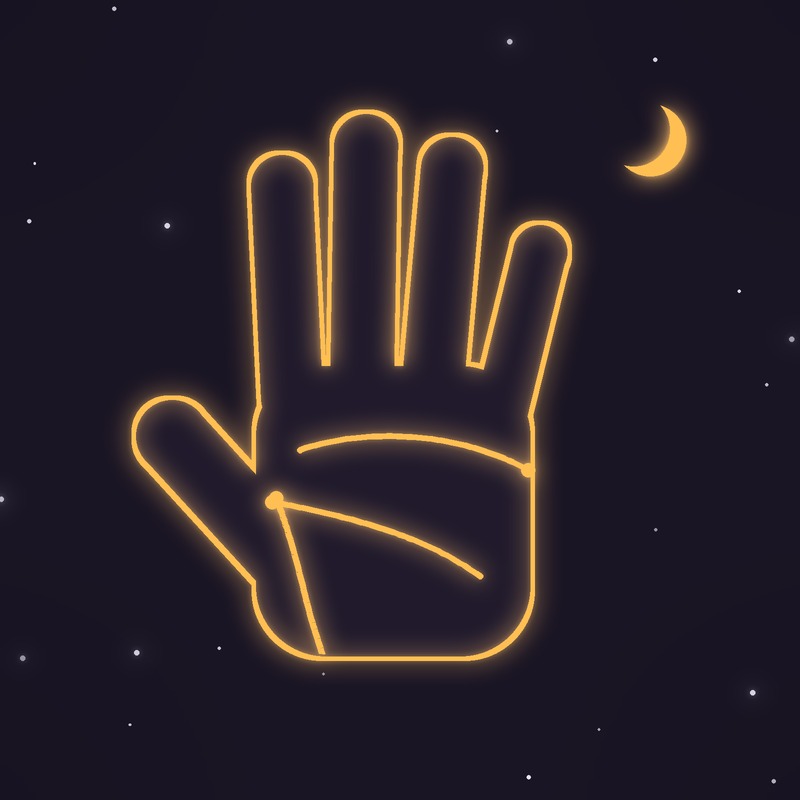 V. The length of the line of life is not the length of life. Old men have been seen who lived to deep grey hair with a line as short as a stump, and youths have been seen who died before their first beard, whose line went all the way round the thumb and ran under the very wrist. Whoever reads the length reads the wrong thing. One should read not the length but what stands upon the line: knots, islands, breaks, crossbars, and the way all of these shift with time.
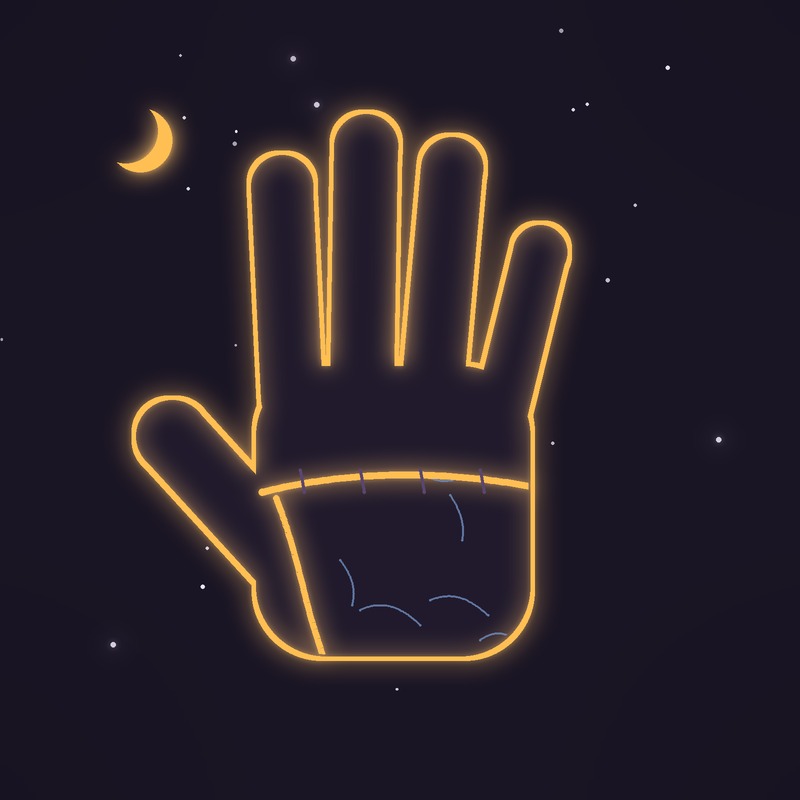
VI. Rarely, in one of many, the two transverse creases, of the head and of the heart, run together into one, and it crosses the palm from edge to edge like a bar across a gate. Such a hand is called closed. In it the term can be seen, but not the days: everything that is to happen sticks together into one, like the pages of a book left out in the rain. Such people are not read. Not because it is forbidden, but because what is read cannot be divided, and the person receives his whole month at once, in a single lump, and no one can bear that.
 VII. It has been noted that the creases appear on the hand before the heart of the unborn begins to beat in full strength. From this some conclude that fate is older than the heart. Others reply that fate is not older, it merely comes earlier, as the master of the house comes in before the guests so as to meet them on the threshold. Others again keep silent. All three opinions are set down here, because none of them has been refuted.
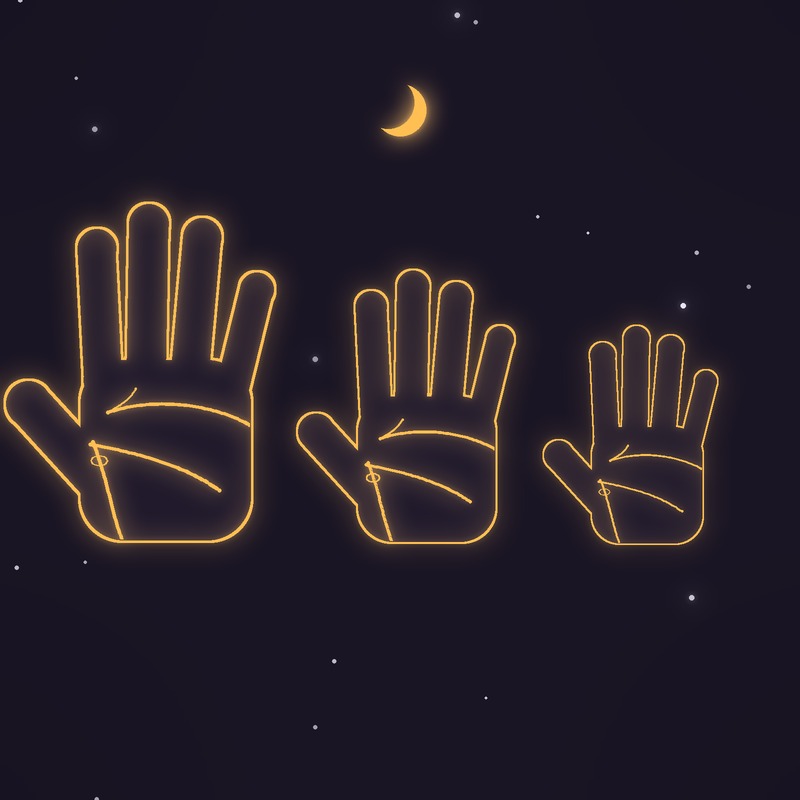
VIII. If the hands of a father, a son and a grandson are laid side by side, it can be seen that the creases repeat not in everything but in what matters: the bend of the line of life at the base of the thumb, the little island at its start, the forking of the line of the heart beneath the forefinger. This is called the family hand. The family hand is passed down more surely than the colour of the eyes or the shape of the nose. A stranger's child passed off as one's own can be known by the palm, even if he resembles the father in the face like two drops of water. It is also written that the family hand shows through the more clearly the more distant the generation, as if with every generation the family writes one and the same word ever harder, until it cuts through the paper.
 IX. It is said by the ancients that the hand is the tool of tools. Here it is added: and the book of books. Only this book is read neither from left to right nor from top to bottom, but from the fingers to the wrist, the way water runs down, and not every eye can see it. One who sees does not see at once. First the skin is seen. Then the creases are seen. Then the creases cease to be creases and become a road, and beyond the road a field opens, and over the field there is weather, and in the weather there are days.
X. It was asked: who writes upon the hand? Does a man write it himself with his deeds, or does the hand write the man, as cloth is cut by a pattern, or does some third one write both? There is no answer. Only a saying is written down, one that is repeated in a certain southern country where by the river there is a deep ravine: the hand does not write the man, nor the man the hand; fate writes the man, and the hand is the place where the ink shows through the paper.
In the margin, in different ink: shows through — so they are writing from the other side.