On One's Own Hand and the Hands of One's Household
I. The reader does not read his own hand. This rule is older than all the others and is repeated in every copy in the very same words, as if it had not been copied out but passed from mouth to mouth by people afraid to change a single word: don't touch your own.
II. By way of explanation it is said: the shoemaker goes without boots, and the reader without a palm. So it is meant to be. That is the explanation for children. To grown-ups another is given, and it is written down here.
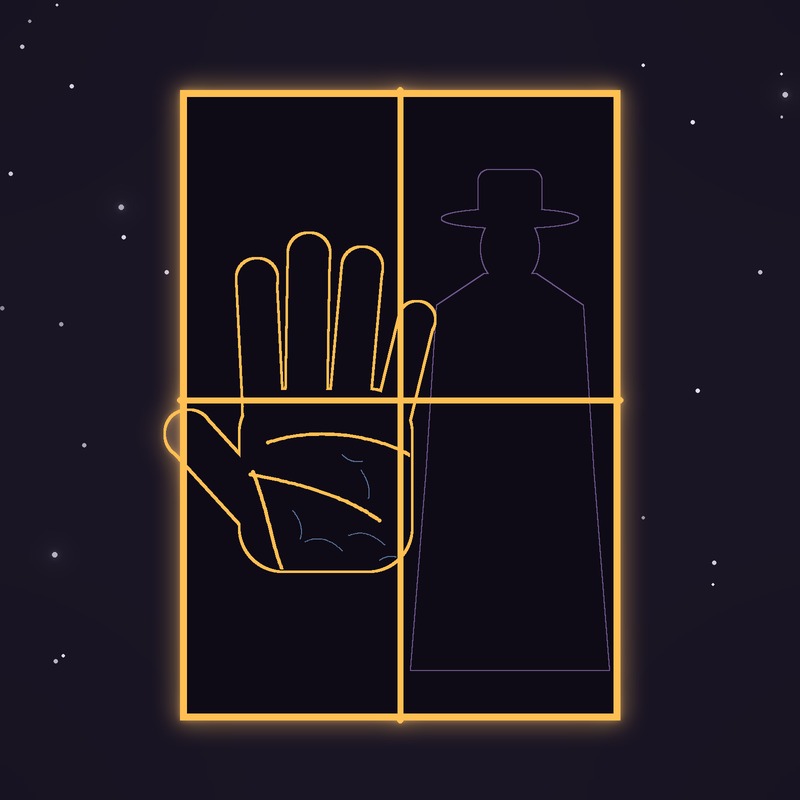
III. The eye that reads another's hand looks out of its own month into the other's, as out of a lit room into a dark garden: the light from the window falls on the paths, and one can see what lies on them. The eye that reads its own hand looks out of its own month into that same month. It is like looking out of a window at night when a lamp is burning in the room: the garden cannot be seen, only the room reflected in the glass, and yourself in it, and over your shoulder the one who stands behind you.
IV. Cases of transgression are recorded.
One of the readers wished to see his month and looked into water, laying his palm upon it. The water in the bowl darkened, as if ink had been poured into it, and grew warm, like blood. He snatched his hand back and for a long time afterwards could not warm it.
Another looked at the image of his own hand caught by light. The image came out, but there were more lines on it than on the hand: two lines of life where the living hand has one, and the second was older than the first. He wrapped the image in black and never unwrapped it again.
A third, they say, simply glanced at his palm by chance while washing, and saw a blot in it, and in the blot the one who stands. And the one who stands turned round for the first time.
V. This is what is taught: from earliest childhood, when falling asleep, put your palms under your cheek, so that nobody peeks. The child thinks that "nobody" means strangers. The grown-up understands that "nobody" means first of all himself. Those trained from childhood do not look at their palms, just as one does not look at the sun: not because of a prohibition, but because the eye turns away by itself. They see the back of the hand, the nails, the fingers, but the palm, when it turns towards them, seems to go out like a lamp, and they look away before they notice that they have.
 VI. The second rule, inseparable from the first: whoever sleeps under your roof, do not read. He is yours, and don't touch your own.
VII. By "under your roof" more is meant than one rooftree. Under your roof is the one with whom you eat at a single small table where knees touch knees. Under your roof is the one whose sleep you listen to at night and know by his breathing. Under your roof is the one you held as an infant. Under your roof, some say, is also the one who has worked for you half a year, because in half a year a stranger enters a house as water enters sand, and does not notice himself when he became one of your own.
 VIII. Why is it forbidden? Two explanations are given.
The first explanation is merciful. Whoever reads his own will see what he does not wish to see: that his mother will die in three weeks, that his wife will be unfaithful, that his son will fall ill — and he will know, and will be able to do nothing, because what is read is known but not cancelled. No heart can bear this, and the prohibition was given to spare it.
The second explanation is not merciful. Whoever lives under your roof is woven into your month like a thread into cloth. In reading him you pull the thread and unravel your own cloth, and everything that was hidden in it comes out into the light. And it is not only the reader who looks at what comes out into the light.
IX. It is written: in one who lives under the same roof as a reader, the hands begin in time to change. Not to pale, as with those who are read, but on the contrary, to show through: lines appear that were not there before, and these lines are not his. Sometimes the bend of another's line of life is found in his palm, the family hand of another family. Sometimes he begins to speak in his sleep in a voice not his own, to cook food not his own, to hum a song not his own. They say this happens when there is a third one in the house, unseen, who needs another body to walk in.
In the margin, in another hand: not everyone who came into the house on his own feet came of his own accord. Some are called.
X. Lastly, the rule about what to do if you have transgressed after all. The answer in every copy is one and short: nothing. The transgressor is not punished; he is noticed. What happens after does not depend on the transgressor.