On Two Lines of Life
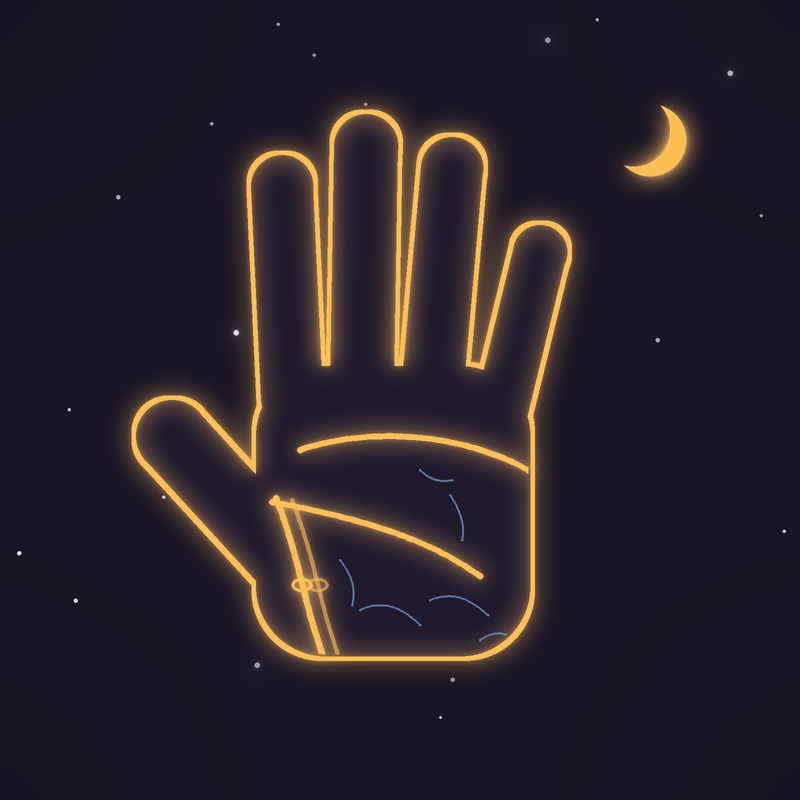
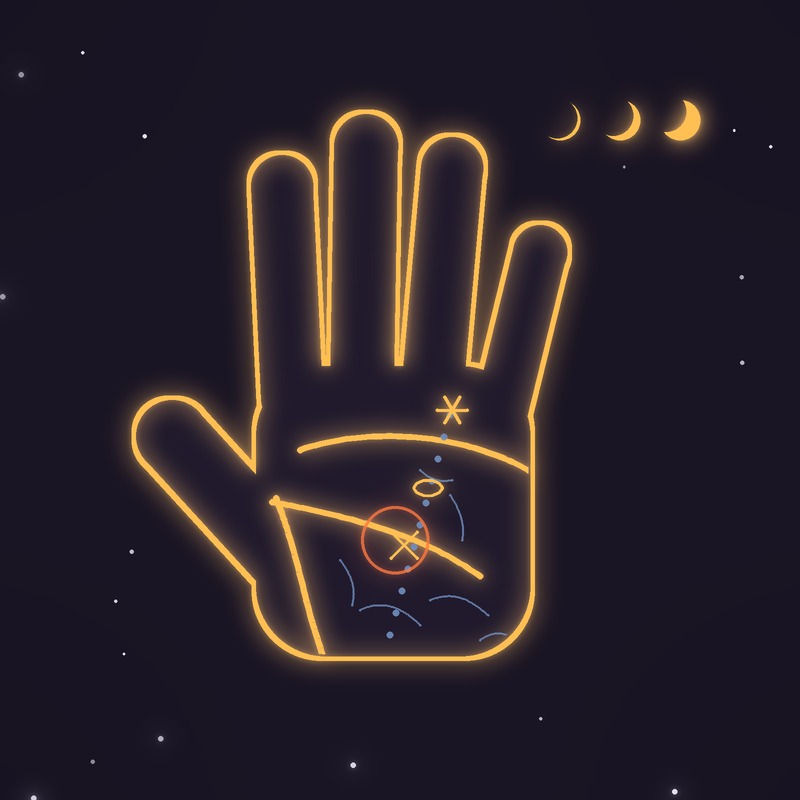
I. It happens that there are two lines of life on a palm. One curves round the base of the thumb, as it should, and beside it, a little above or a little below, runs a second. Books call it by different names: the sister line, the line of Mars, the guardian angel, double strength. All these names mean one and the same thing, and all are half wrong.
II. Two double lines must be told apart, alike in appearance but opposite in nature. They are easily confused, because both lie in the same place and both are deep. They can be told apart in only one way: by looking not at where the second line lies but at what stands upon it.
III. A double line of the first kind is the shadow of its own line. It repeats it in everything: bends, knots, breaks, islands. Where there is an island on the first, there is an island on the second; where there is a break, there is a break, as if someone had drawn the same line twice, pressing harder on the pen the first time. It means that the life in the person is so strong that it would not fit into one road and went in two ruts, like a broad cart on a narrow road. Such people live long, fall ill seldom and come out of troubles in which others perish. Of them it is said: he has two lives in him. There is nothing bad in this.
IV. A double line of the second kind is not a shadow but another's line. It lies beside the first but goes its own way: its own bends, its own islands, its own crossbars. It is usually deeper, darker and broader than the first, as if it had been cut with a knife and the first drawn in pencil. Along it fine wrinkles can be seen, such as old people have, even if the person is young. Sometimes it begins not where one's own begins but higher, at the very base of the forefinger. It is called the borrowed line.
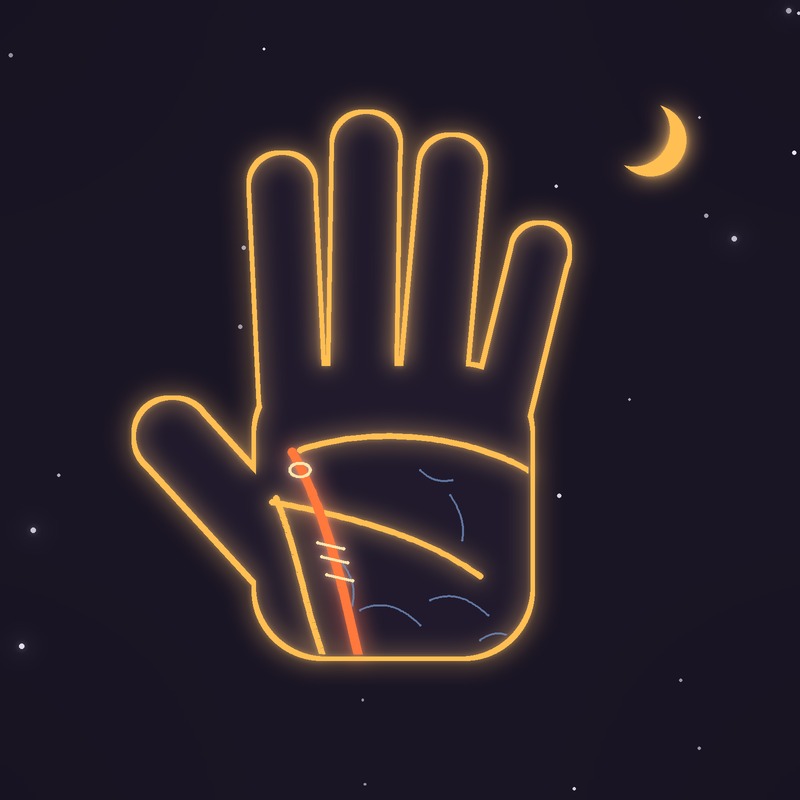 V. A borrowed line is another's life carried over into another's hand. How it is carried over is not written here, and not because it is not known, but because to write it down would be to teach it. It is written only that it is carried over at death: the one who is leaving can leave his line in the hand of the one who stays, if he holds his hand on the last night and if the one who stays is not yet grown, still soft, not yet closed. They say such a child is called by name, tenderly, and he comes, and in the morning remembers nothing except that it was evening and he was called.
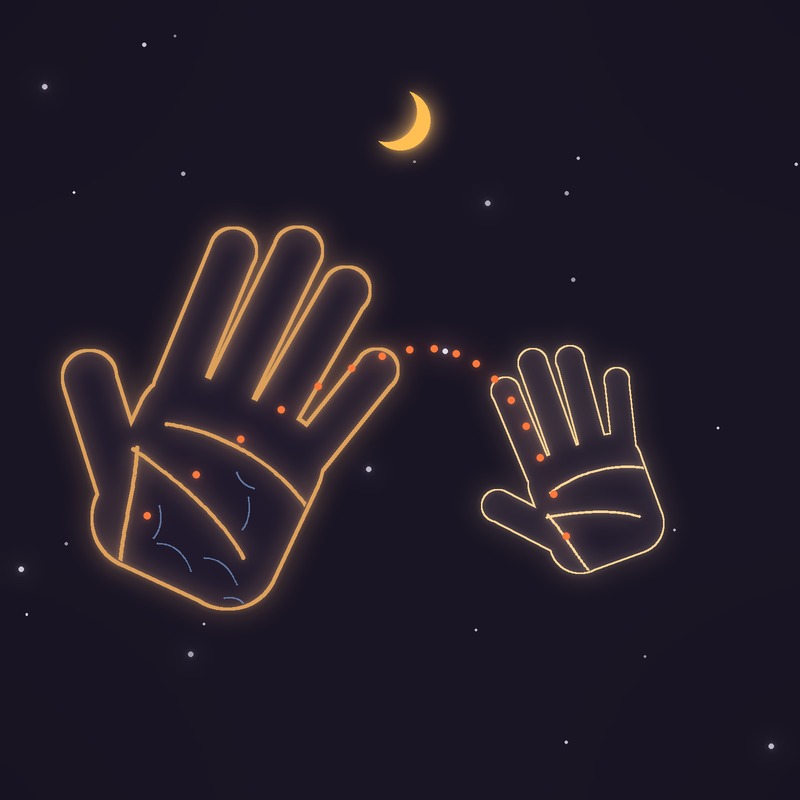 VI. Whose line it is can be known by the family hand. If one lays side by side the hand of the one who carries it and the image of the hand of the one who gave it, one sees that the borrowed line matches the giver's line not by likeness but by identity, as two impressions of the same seal match: the island at the start, three crossbars in the middle, everything in its place. Sometimes, they say, the image of the giver's hand is found where it is not expected: impressed in copper, burned into wood, showing through on a door.
VII. What does a borrowed line do in another's hand? Different things are written.
Some write: it guards. The giver lives in it as a candle lives in a lantern, and looks at the world through the eyes of the one who carries it, and watches over him as he did in life.
Others write: it waits. The giver has not wholly died, but has only moved house, and waits for a chance to move on again, into someone who is near to hand. The one who carries a borrowed line does not feel this at once, but after ten or twelve years, when he notices that he knows things he never learned and can do what he never could.
Others again write briefly: what is borrowed is returned.
VIII. Of returning it is written thus. Every borrowed line must go back to where it was taken from, or to where it was meant to go when it was taken, and the time of return is not chosen by the one who carries it. Sometimes a borrowed line pales for years, quietly, and goes without a trace, like a stream that has dried up, and the one who carries it does not notice the loss. Sometimes it goes all at once, in a single night, and then one line remains in the hand, one's own, thin and pale, unused to being alone. They say that after this a person learns to live anew for a long time, as one learns to walk who for many years walked with a stick and suddenly lost it.
In the margin, in another hand: and if the borrowed line is held by force, it will take one's own with it.
IX. There are people who carry a borrowed line and do not know it. It is written: to them above all it is forbidden to look at their own palm. Not because they will see two lines, but because, having seen two, they will ask whose the second is. And the one whose it is will hear that he has been asked about.
X. And the last thing. They say there are hands in which there are two borrowed lines, and then there are three lines of life on the palm, like three strings. None of those who wrote this down has seen such hands. But it is written that one such hand was seen in a dream, and that hand was old, in black earth, and its fingers moved, as if counting something one by one.